A car that doesn't roll as freely as it used to might have a brake staying partly applied. Sometimes you notice a hot smell after parking. Sometimes one wheel collects much more brake dust than the others, even though the pedal still feels familiar.
When a brake keeps dragging, the engine has to work against that friction throughout the drive. The pads wear faster, the rotor gets hotter, and fuel economy suffers. The repair starts with finding out why that brake isn't releasing.
Sticking Caliper Slides Wear Brake Pads Unevenly
Many cars have floating calipers that move along slides when you apply and release the brakes. If corrosion builds up or the protective boots split, those slides start sticking. That leaves one pad doing more work or rubbing against the rotor after you've taken your foot off the pedal.
Can you judge the brakes just by looking through the wheel? Usually, you'll only get a good view of the outer pad. The inner one might be much thinner. During a brake inspection, we check both pads and how freely the caliper moves. That wear pattern often explains why a brake job is needed sooner on one side.
Brake Pads Need Room to Move in Their Brackets
The pads also need to move freely within the caliper bracket. Rust growing under the retaining clips squeezes that space. A pad then gets stuck against the rotor, even if the caliper piston and slides are working.
That's why preparing the brackets is part of fitting new pads. We clean the mounting areas, check the fit, and use the correct hardware and lubricant where the vehicle calls for it. If the car still smells hot or pulls after brake service, bring it back for a check. Don't dismiss those symptoms as normal break-in.
A Damaged Brake Hose Can Hold a Caliper On
A flexible brake hose may look fine on the outside, but internal damage can stop fluid from returning freely. When you press the pedal, pressure applies the brake, then stays trapped after you release it. The result feels much like a seized caliper.
Why fit a new caliper if the hose is keeping it applied? We check for trapped pressure and test the caliper's movement before deciding which part has failed. This isn't a job for loosening fittings in the driveway. Opening a brake line introduces risks that go well beyond finding the hot wheel.
Parking Brakes Don't Always Release Completely
You lower the handle or press the parking brake button, but a cable or lever at the rear wheel stays stuck. Electronic parking brakes have their own motors and release procedures. Some cars also use separate parking brake shoes tucked inside the rear rotors, where you won't see them through the wheel.
Did the problem start after the car sat overnight with the parking brake on? Mention that when booking. We check the mechanism at the wheels and confirm that it releases fully. For electronic brakes, we follow the service procedure before moving the actuator or piston so a repair doesn't create another broken part.
Brake Heat and Drag Affect Fuel Economy
Think about pushing a shopping cart with one wheel that won't turn freely. Your engine is doing a similar kind of extra work when a brake drags. More friction also means more heat, and continued overheating damages pads, rotors, and sometimes nearby seals.
Watch for changes such as:
- A hot brake smell after an ordinary drive
- Much more brake dust on one wheel
- Pulling when braking or coasting
- A drop in MPG without a change in driving
- Vibration that develops as the brakes warm up
- The car feeling reluctant to roll
Don't touch the brake or wheel to test how hot it is. Strong burning smells, smoke, or weaker braking mean it's time to stop safely and arrange help.
How We Check Brake Pads and Rotors
When checking your brakes, we measure the pads and rotors and look at how they're wearing. If a rotor is already thinner than its replacement limit, adding new pads won't fix that. We also sort out sticking slides, binding pads, or trapped pressure so the new parts aren't damaged by the same dragging brake.
Some brakes release normally once they've cooled, then start sticking again after a drive. Let us know how long you were driving before the smell or pull appeared. Recreating that pattern helps us find the fault and check that the brake releases properly after the repair.
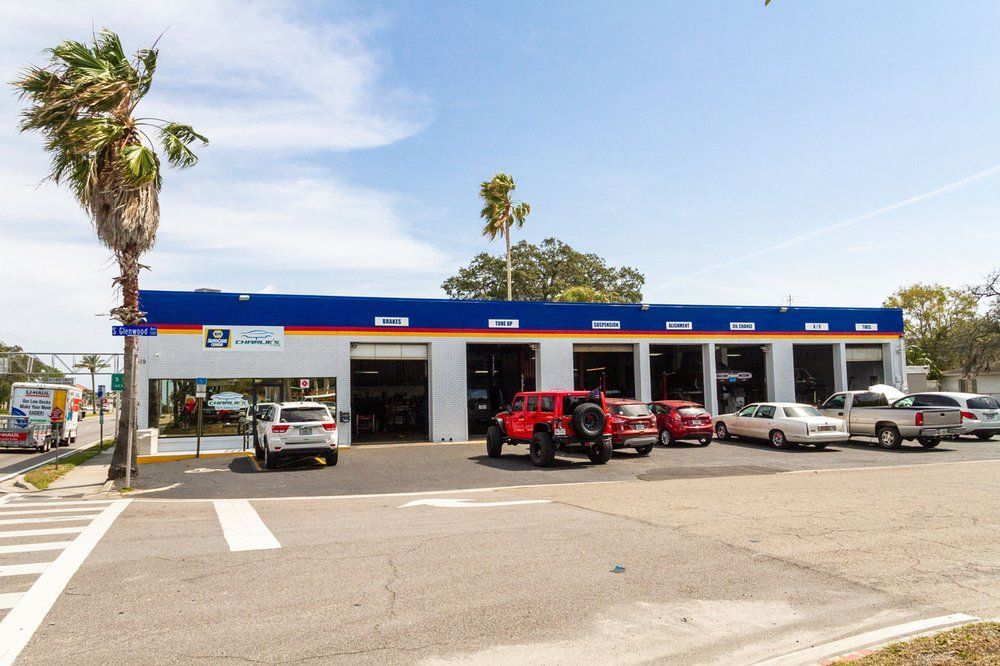
Brake Repair at Charlie's Car Care in Clearwater, FL
Charlie's Car Care in Clearwater, FL, can check for dragging brakes, uneven pad wear, and overheating. Include any recent brake work when describing what changed.
Book a brake inspection if one wheel keeps running hot or the car no longer rolls normally.