A hard pothole hit can make your stomach drop before you even know if anything is damaged. The tire slams into the edge, the steering wheel jumps, and for a few seconds, you listen for a noise or feel for a shake.
Sometimes the vehicle seems fine afterward. Other times, it starts pulling, vibrating, or wearing the tires differently. Yes, a pothole can knock your wheels out of alignment, but it can also damage tires, wheels, steering parts, and suspension components. That is why the whole area needs to be checked after a serious impact.
What Happens When You Hit A Pothole
When a tire drops into a pothole or strikes the far edge, the force travels through the tire, wheel, hub, steering, and suspension. The faster you are moving, the sharper the impact, and the deeper the pothole, the more stress those parts take.
The tire sidewall can pinch. The wheel can bend. Suspension arms, bushings, struts, tie rods, and ball joints can all take part in the hit. Even if nothing breaks, the impact can shift alignment angles just enough to change how the tires meet the road.
That small change may not make the vehicle impossible to drive. It may simply make it drift, pull, or wear tires faster than before.
How A Pothole Changes Alignment
Wheel alignment is based on precise angles. Camber, caster, and toe affect how the tires sit, steer, and roll. A pothole impact can push one or more of those angles out of specification.
Toe is especially important for tire wear. If the front of the tires points slightly inward or outward more than they should, the tires can scrub against the road. Camber affects whether the tire leans inward or outward. If it is off, one edge of the tire may wear faster. Caster helps with steering return and stability.
Alignment angles do not need to be wildly wrong to cause trouble. A small change can quietly shorten tire life over thousands of miles.
Signs Your Alignment May Be Off After A Pothole
After hitting a pothole, pay attention to how the vehicle feels over the next few drives. Some symptoms show up right away. Others take time, especially tire wear.
Common signs include:
- Vehicle pulls left or right
- The steering wheel sits crooked
- New vibration at speed
- Tires squeal during normal turns
- Vehicle wanders on the highway
- Uneven tread wear begins
- Steering feels loose or off-center
- A clunk appears over bumps
These symptoms do not all mean the same repair is needed. Pulling may be alignment. Vibration may be a bent wheel or tire damage. A clunk may point toward suspension wear. Testing helps separate one problem from another.
Tire And Wheel Damage Can Look Like Alignment Trouble
A pothole can damage a tire without making it go flat right away. The sidewall may develop a bubble, the internal structure may weaken, or the tire may slowly start losing air. A sidewall bubble is serious because it means the tire has been damaged internally.
The wheel can also bend from the impact. A bent rim may cause vibration, air loss, or a wobble that feels worse at certain speeds. From the driver’s seat, that can feel like an alignment problem, but an alignment will not straighten a bent wheel or repair a damaged tire.
That is why the tire and wheel should be checked before assuming the alignment is the only issue.
Steering And Suspension Parts Can Be Affected
The steering and suspension hold the wheels in position. If a pothole bends or loosens one of those parts, the vehicle may not hold alignment correctly even after adjustment. Tie rods, control arms, struts, ball joints, bushings, and wheel bearings can all be affected by a hard hit.
Sometimes the damage is obvious. Other times, a worn part that was already weak becomes noisy after the impact. The pothole may not have created all the wear, but it can reveal it.
If a part is loose or bent, aligning the vehicle before repairing that part is not the right order. The worn or damaged component should be addressed first to ensure the alignment has a solid foundation.
Why Tire Wear Should Be Checked Later Too
A vehicle may feel acceptable immediately after a pothole hit, but the tires can tell the story later. Inner-edge wear, feathering, cupping, or one tire wearing faster than the others can show that the tire is not rolling correctly.
This is one reason regular maintenance is useful. Tire rotation and inspection can catch early wear before a tire is ruined. Once the tread is worn unevenly, alignment can prevent more damage, but it cannot restore rubber that is already gone.
If you hit a large pothole and then notice new tire wear weeks later, the two may be connected.
Should You Get An Alignment After Every Pothole?
Not every small bump requires immediate alignment. Roads are rough, and vehicles are built to handle normal impacts. But a hard pothole hit, especially one followed by pulling, vibration, crooked steering, tire pressure loss, or noise, should be checked.
The best approach is to inspect the tires, wheels, steering, and suspension first. If everything is tight and undamaged,
alignment measurements can show whether the angles are still correct. That gives a clear answer instead of replacing parts or adjusting angles without knowing what changed.
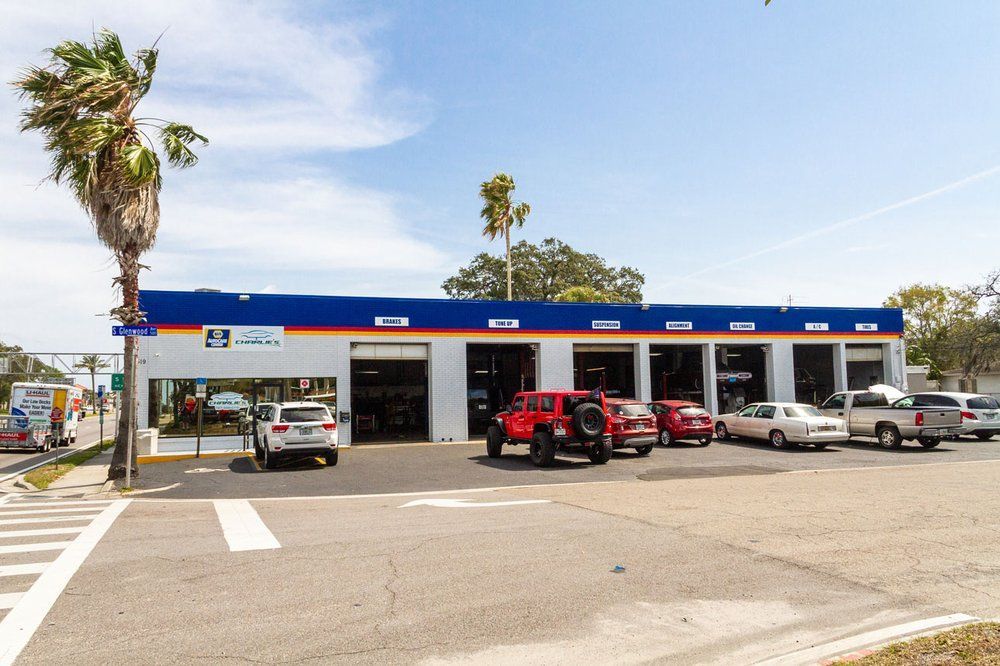
Get Wheel Alignment In Clearwater, FL, With Charlie's Car Care
If you hit a pothole and now notice pulling, vibration, crooked steering, tire wear, or new suspension noise,
Charlie's Car Care in Clearwater, FL, can check the tires, wheels, steering, suspension, and alignment angles.
For wheel alignment service after pothole damage, contact us to schedule an appointment.